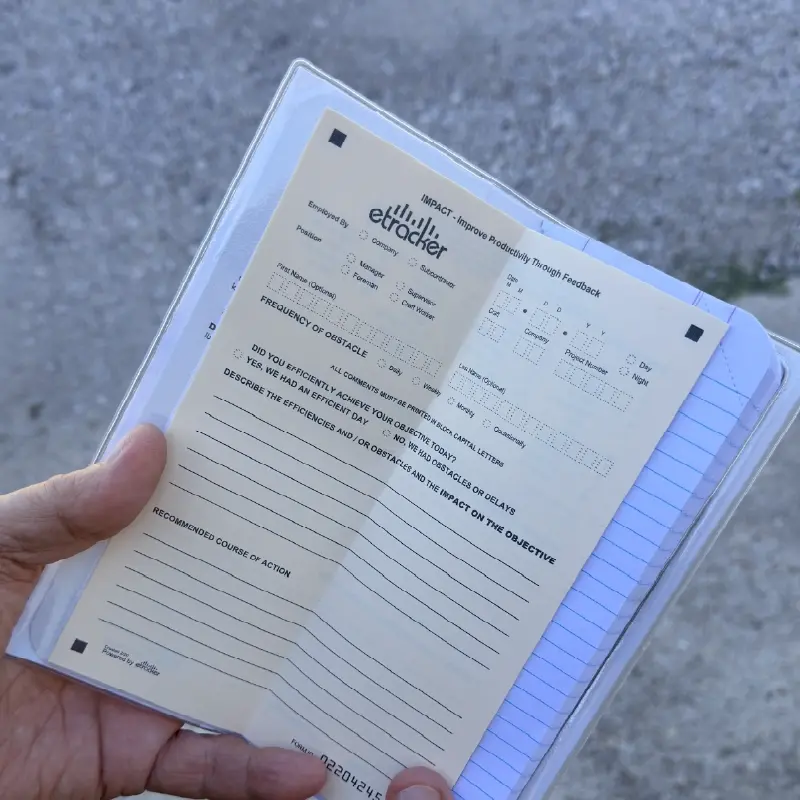

A tally book only works if it survives the field.
The cover is what takes the abuse: back pockets, truck dashboards, rain, sweat, grit, oil, and constant handling. If the cover fails, the notes fail with it. That’s why custom tally book covers are one of the simplest upgrades you can make to protect field documentation and make it easier for crews to stay consistent.
This guide walks through what to customize, what actually matters in real conditions, and how to choose a cover that looks professional and holds up.
Why the cover matters more than most people think
Field notes are rarely just “notes.” They’re measurements, inspection details, punch items, daily work records, and the quick reminders that prevent rework. When the cover tears, warps, or soaks through, pages get damaged, handwriting smears, and data gets lost. Then teams waste time reconstructing information that should have been captured once.
A durable, purpose-built cover solves three problems at the same time:
-
Protection: It keeps the book usable longer, especially in wet or dirty conditions.
-
Consistency: When everyone carries the same format, notes become easier to review, hand off, and store.
-
Pride and identity: Company logo covers do more than “brand.” They signal standard, belonging, and professionalism.
What makes a cover “field-ready”
Before you customize anything, make sure the base cover is built for real use. Here’s what to look for.
Material that matches the environment
Vinyl is common because it wipes clean and resists water. Leather can be strong and professional, but the finish and stitching matter a lot if it will live around moisture and grime. If you’re in extreme heat or constant humidity, pick a material that does not soften, curl, or crack over time.
Stitching and stress points
Most failures happen at corners, spine folds, and the edges where the book gets tugged in and out of pockets. Reinforced stitching and clean edge finishing matter more than fancy features.
Fit that stays tight
A cover that’s too loose gets caught, bends, and wears out faster. A cover that fits the book properly protects the pages and keeps the notebook square in a pocket.
Useful add-ons that do not create bulk
Job aids and vinyl sleeves can be helpful if they are low-profile. Overbuilt covers can become annoying, and when they become annoying, they stop getting used.
How to customize your cover the right way
Customization should support the work, not just decorate it. Here are the options that tend to deliver the most value.
1. Logo and brand placement
Company logo covers work best when the mark is readable, placed intentionally, and sized for the way the book is carried. Most crews see the front cover constantly, so keep the design clean and high contrast.
2. Crew, role, or department identification
If you issue books across multiple crafts, teams, or locations, consider adding a role line or department mark. It reduces mix-ups and makes it easier to manage replacements.
3. Safety or standards message
A short phrase can reinforce what you care about without turning the cover into a poster. Keep it direct. The goal is a reminder, not clutter.
4. Color strategy
Color can help standardize books across projects. Some companies use one color per site, per trade, or per program. It makes it easier to see what belongs where, especially in shared workspaces or vehicles.
5. Pairing with custom branded tally books
If you’re already doing custom branded tally books, the cover should complement the book design, not compete with it. The best setups look unified: same tone, same identity, same standard.
Common use cases in the field
Here’s where custom tally book covers tend to pay off fastest:
-
New hire and onboarding packs: A durable cover makes the notebook feel like issued gear, not optional stationery.
-
Crew standardization: Same cover, same size, same expectation. It creates consistency without extra meetings.
-
Inspection and quality documentation: When notes must be readable, recoverable, and defensible, protection matters.
-
Client-facing professionalism: If your team hands notes to supervisors, owners, or customers, the cover becomes part of your image.
-
Program launches: Safety, productivity, or improvement campaigns often stick better when crews receive a physical tool that signals “this is real.”
What to avoid when ordering custom covers
A few mistakes show up again and again:
-
Choosing style over durability: A cover that looks great but fails in 60 days will not build trust.
-
Overloading the design: Too many logos, slogans, and graphics makes the cover noisy and less readable.
-
Ignoring pocket fit: If it doesn’t ride well in a pocket, workers will set it down and lose it.
-
Not planning for replacement cycles: Tally books get issued, lost, worn out, and replaced. Build a simple reorder path.
A simple spec checklist you can reuse
When you’re ready to order, decide these items first:
-
Tally book size the cover must fit
-
Material preference based on conditions
-
Logo placement and size
-
Color choice
-
Any crew identifiers
-
Any slim add-ons (aids, inserts, sleeves)
Once you have those, ordering becomes straightforward.
Design your custom tally book cover and build a standard your team will carry with pride.